ServicesCommercial Roof Repair
Commercial Roof Repair in Warr Acres
A leak over your shop floor or office ceiling usually starts at a seam, a drain or the flashing around rooftop equipment. We trace it to the real source, explain what we found in plain terms, and repair it so your business keeps running.
What commercial roof repair actually covers
Most business buildings have flat or low-slope roofs, and they fail differently than a shingled roof on a house. Water does not run off quickly, so small openings at seams, drains and edges matter a lot. Repair means fixing those specific weak points without tearing off the whole roof.
Our team brings over 20 years of combined roofing experience, and we hold an Oklahoma commercial roofing license along with an Oklahoma general contractor license. In practice, that means we can work on the membrane, the flashing, the metal edge and the rooftop details that tie into your building.
Before we touch anything, we tell you what kind of roof you have, what is wrong with it and what your options are. If a repair will hold, we say so. If the roof is past the point where patching makes sense, we explain why and talk through commercial roof replacement.
What we repair on commercial roofs
Seams and membrane damage
TPO and EPDM are single-ply membranes, meaning one rubber-like sheet covers the roof. Their weak spots are the seams where sheets join and any puncture from foot traffic or hail. We clean, prep and weld or bond new material over the damaged area.
Flashing at curbs and walls
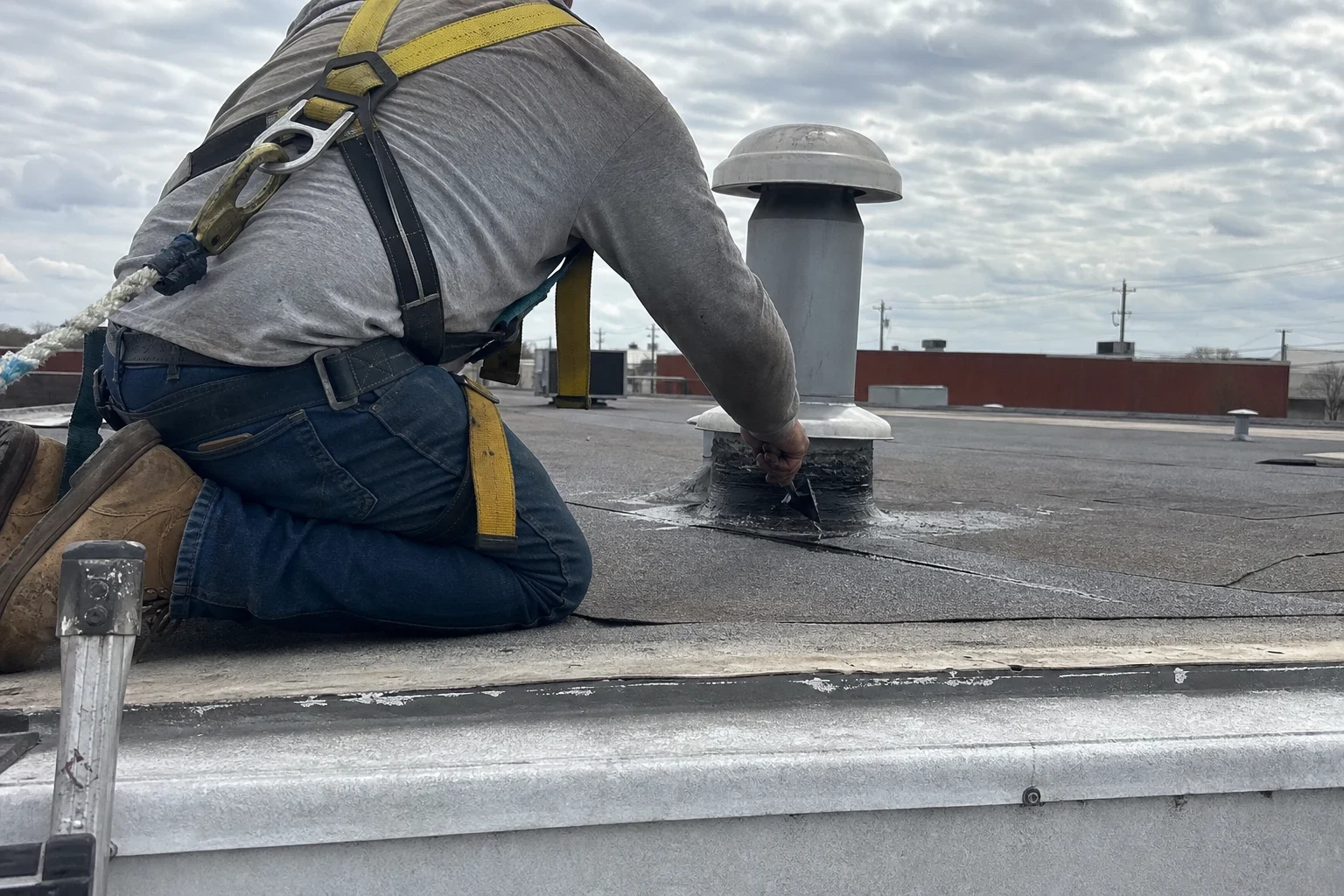
Flashing is the strip of material that seals the roof to anything sticking up, like HVAC curbs, vent pipes and parapet walls. It is the most common leak point we see. We reseal or replace it so water cannot slip behind it.
Drains, scuppers and ponding
Water that sits on a flat roof slowly works its way into any small opening. We clear and repair drains and scuppers, and we can add material to build up low spots so water moves off the roof.
Modified bitumen and built-up roofs
These layered asphalt roofs crack and blister as they age in hot summers. We cut out failed sections and install new plies that bond to the sound roof around them.
Metal roof panels and fasteners
On metal roofs, screws back out as panels expand and contract, and the rubber washers wear down. We replace fasteners, reseal laps and patch rusted spots.
Signs your building's roof needs repair
- Stained ceiling tiles
- Brown rings on drop-ceiling tiles often show up long before water drips. The stain is rarely right under the leak, since water travels along the deck first.
- Water still standing two days after rain
- A little water right after a storm is normal. Puddles that linger for 48 hours or more point to clogged drains or sagging spots that need attention.
- Bubbles, blisters or loose seams
- Blisters mean air or moisture is trapped under the surface. Seams that lift at the edges will let water in with the next heavy rain.
- Membrane pulling away from walls
- Single-ply roofs can shrink with age and tug at the edges, a problem called tenting. It strains the flashing until it tears.
- Rusty or backed-out screws
- On a metal roof, loose fasteners and rust streaks are early warnings worth fixing while the repair is still small.
- A musty smell or rising cooling bills
- Wet insulation under the roof stops insulating and can smell damp. If your building feels harder to cool, the roof may be holding water.
How a repair visit goes
- 1
A phone call about what you are seeing
Tell us where the water shows up, when it started and what kind of business runs underneath. That helps us plan access and timing around your hours.
- 2
A roof walk and leak trace
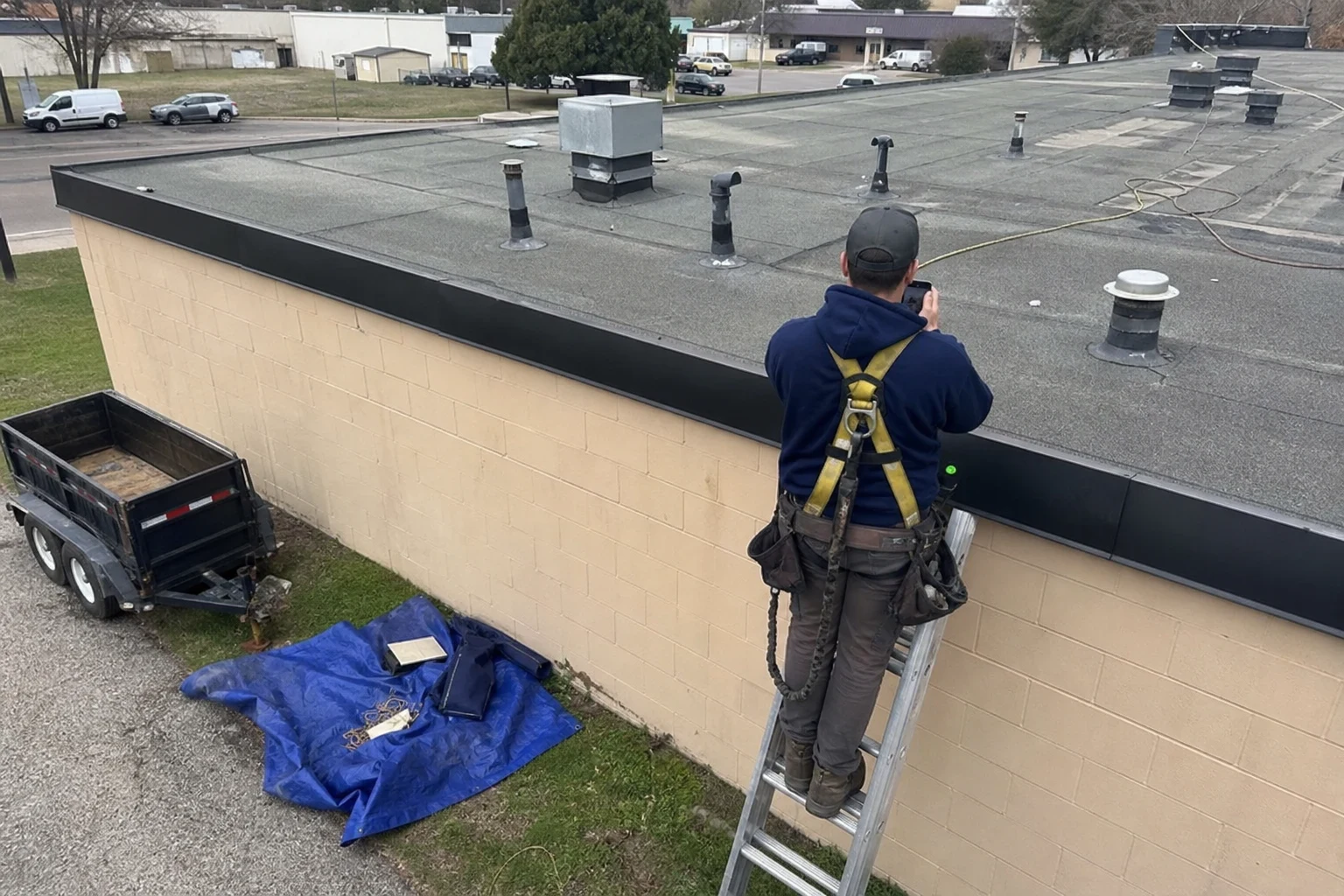
We go up, look at the seams, flashing and drains, and follow the water path back to its source. We take photos of everything we find.
- 3
Findings in plain English
We walk you through the photos, name the problem and lay out your options with a written estimate. You decide what happens next.
- 4
Repair day
We set up away from your entrances where we can, keep materials secured on the roof and work in a way that keeps your doors open. Most repairs wrap up without disrupting your customers or staff.
- 5
A final check
Before we leave, we check the repaired area, clear debris off the roof and send you photos of the finished work.
What moves the price of a commercial roof repair
No two flat roofs fail the same way, so the number comes from what we find once we are up there and have traced the leak. You get a written estimate before anything starts, with each part of the job listed on its own line. These are the things that change the total the most.
- Roof type and material
- TPO, EPDM, modified bitumen, built-up and metal each call for their own materials and repair methods. Some older roofs also need special primers or adhesives before new material will bond.
- How far the water has spread
- A surface puncture is a small fix. Once water has soaked the insulation below, those wet sections have to be cut out and replaced, which adds material and labor.
- Access and rooftop equipment
- Roof height, whether we need a ladder or a lift, and how much HVAC equipment sits near the problem all change how long the work takes.
- Number of problem areas
- One failed seam is a smaller job than several leaks scattered across the roof. If the count points to a bigger issue, we will say so plainly.
Commercial roof repair questions
- How do I know whether to repair or replace my building's roof?
- When the trouble is limited to a few spots and the rest of the membrane is in good shape, repair is usually the sensible choice. If leaks keep appearing in new places, or much of the insulation underneath is wet, a new roof often costs less over time. We show you the photos from your roof and explain how we reached our recommendation.
- Can you work while my business is open?
- Yes, in most cases. The work happens up on the roof, and we plan where we set up and when materials arrive so your entrances and parking stay open. If a step needs a short quiet window, we agree on the timing with you first.
- Are you licensed for commercial work?
- Yes. We carry an Oklahoma commercial roofing license as well as an Oklahoma general contractor license. Between us, our crew brings over 20 years of combined roofing experience on flat and sloped roofs.
- Will insurance cover my commercial roof repair?
- That comes down to what caused the damage and what your policy says. Claims for hail and wind tend to be accepted, while damage from age and normal wear generally is not. We take clear photos of what we find so you have something solid to hand your adjuster, and our storm damage repair page walks through that process in more detail.
- How can I keep small leaks from coming back?
- Keep drains and scuppers clear, limit foot traffic on the roof and have it checked after big storms. Regular roof inspections catch loose seams and worn flashing while they are still quick fixes.
Get a clear answer about your building's roof
Tell us what you are seeing and where. We will set up a time to look, trace the leak and explain your options in plain terms.