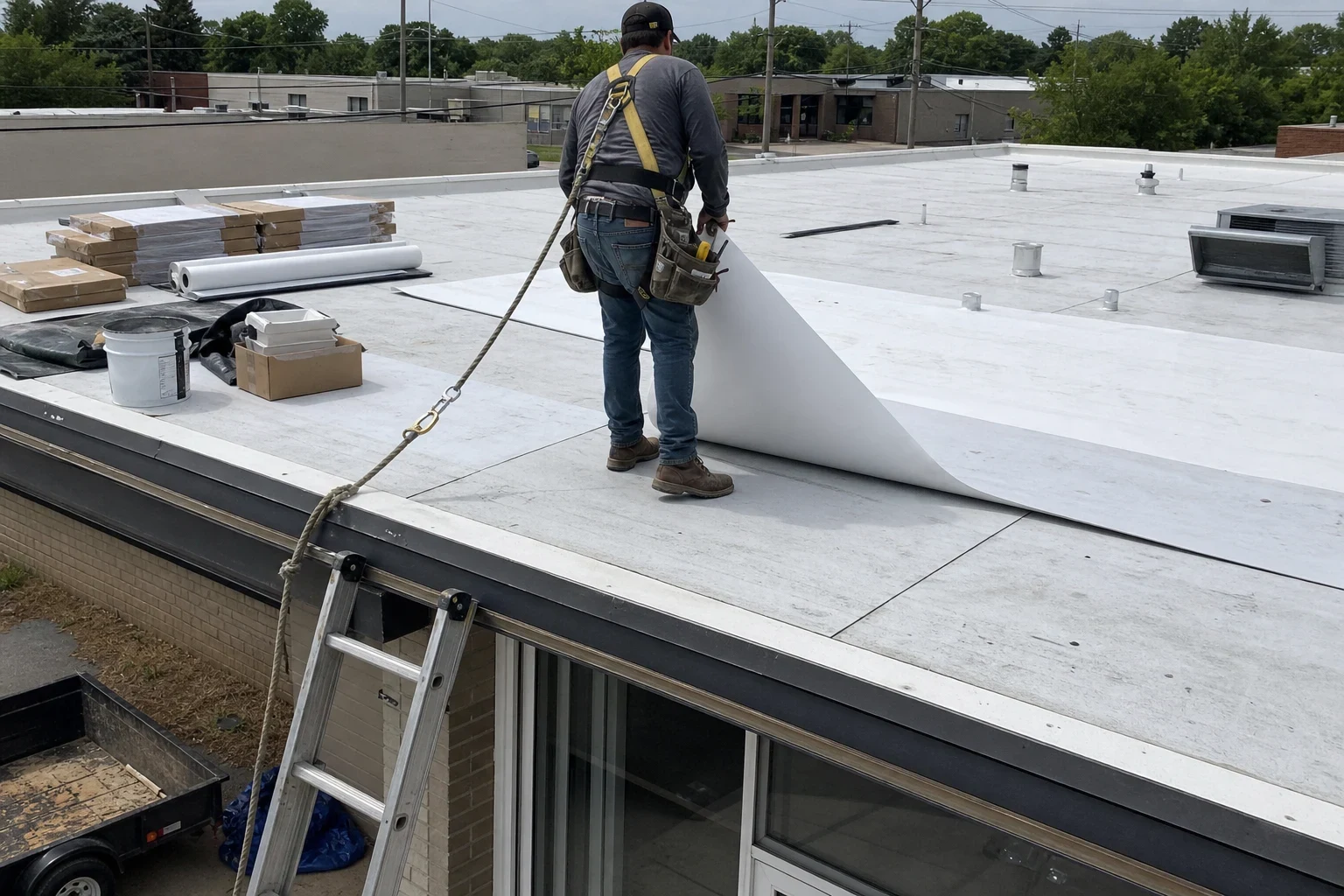
ServicesCommercial Roof Replacement
Commercial Roof Replacement in Warr Acres
When a flat or low-slope roof keeps leaking after every patch, replacement is often the cheaper path over time. We walk you through each roofing system, what it costs to own and how the work fits around your business, so you can make a clear decision.
When Replacing Your Commercial Roof Makes Sense
Commercial roofs fail differently from pitched shingle roofs. Water sits longer on a low slope, seams pull apart as the membrane ages, and wet insulation underneath can stay hidden for months before a ceiling tile stains. Once the insulation is soaked or the membrane is brittle across most of the roof, repairs stop holding.
We start by telling you plainly which situation you are in. If targeted work will buy you several good years, we will point you to commercial roof repair instead. If the roof is past that point, we explain your replacement options side by side, with what each one means for cost, lifespan and day-to-day upkeep.
Our crew brings over 20 years of combined roofing experience to this work, and we hold an Oklahoma commercial roofing license along with an Oklahoma general contractor license.
What a Commercial Roof Replacement Includes
- Core cuts and moisture check
- We cut small test samples to see how many layers are on the roof and whether the insulation is dry. That answer decides whether a full tear-off is needed or a recover is allowed.
- Tear-off or recover, explained
- A tear-off removes everything down to the deck. A recover installs a new membrane over the existing roof when code and conditions allow, which can save time and disposal cost. We show you why one fits your building better.
- Insulation and tapered drainage
- New insulation board goes down before the membrane. Where water has been ponding, tapered insulation adds slope toward drains or scuppers so the new roof sheds water instead of holding it.
- Membrane or metal system
- We install TPO, EPDM, modified bitumen or metal depending on the building, budget and how the roof is used. Each has different strengths, and we explain them before you choose.
- Flashing, curbs and edge metal
- Most leaks start at transitions. We rebuild flashing at parapet walls, rooftop unit curbs, pipe penetrations and roof edges, and replace drains or scuppers that are worn out.
- Permit and cleanup
- We pull the commercial permit, arrange inspections, and haul away old roofing material so your lot and entrances are clear when we finish.
Signs Your Building Needs a New Roof
Leaks that return after repairs
If the same areas leak again after being patched, the problem is usually spread across the membrane or the insulation below it.
Ponding water that stays for days
Standing water more than two days after rain points to sagging insulation or poor drainage. It speeds up membrane wear and adds weight to the structure.
Blistering, cracking or shrinking membrane
Bubbles in modified bitumen, cracks in an older EPDM sheet, or membrane pulling away from walls all mean the roof surface is reaching the end of its life.
Areas that give when stepped on
If parts of the roof flex or sink a little under your weight, water has likely soaked the insulation or weakened the deck beneath the membrane.
Rising energy bills and interior stains
Wet insulation loses much of its value, so cooling costs climb in an Oklahoma summer. Stained ceiling tiles or a musty smell inside often show up at the same time.
What Affects the Cost of a Commercial Roof
Every commercial roof is priced by its own size, layers and details, so we do not quote numbers before we have been on the roof. These are the factors that move the price most. Your written estimate shows how each one applies to your building.
Tear-off versus recover
Removing old layers adds labor and disposal fees. A recover costs less when the existing roof is dry and code allows another layer.
Roofing system chosen
TPO, EPDM, modified bitumen and metal each differ in material cost, installation time and expected service life.
Insulation and drainage needs
Replacing wet insulation or adding tapered slope to fix ponding adds material, but it often solves the reason the old roof failed early.
Penetrations and rooftop equipment
Every curb, vent, skylight and HVAC unit needs its own flashing. A busy roof takes more time than a clear one.
Deck condition and access
Rotted or rusted decking found during tear-off must be replaced. Tight lots or tall buildings may need extra equipment to get materials up.
How Your Replacement Moves From First Look to Final Inspection
- 1
Roof walk and core samples
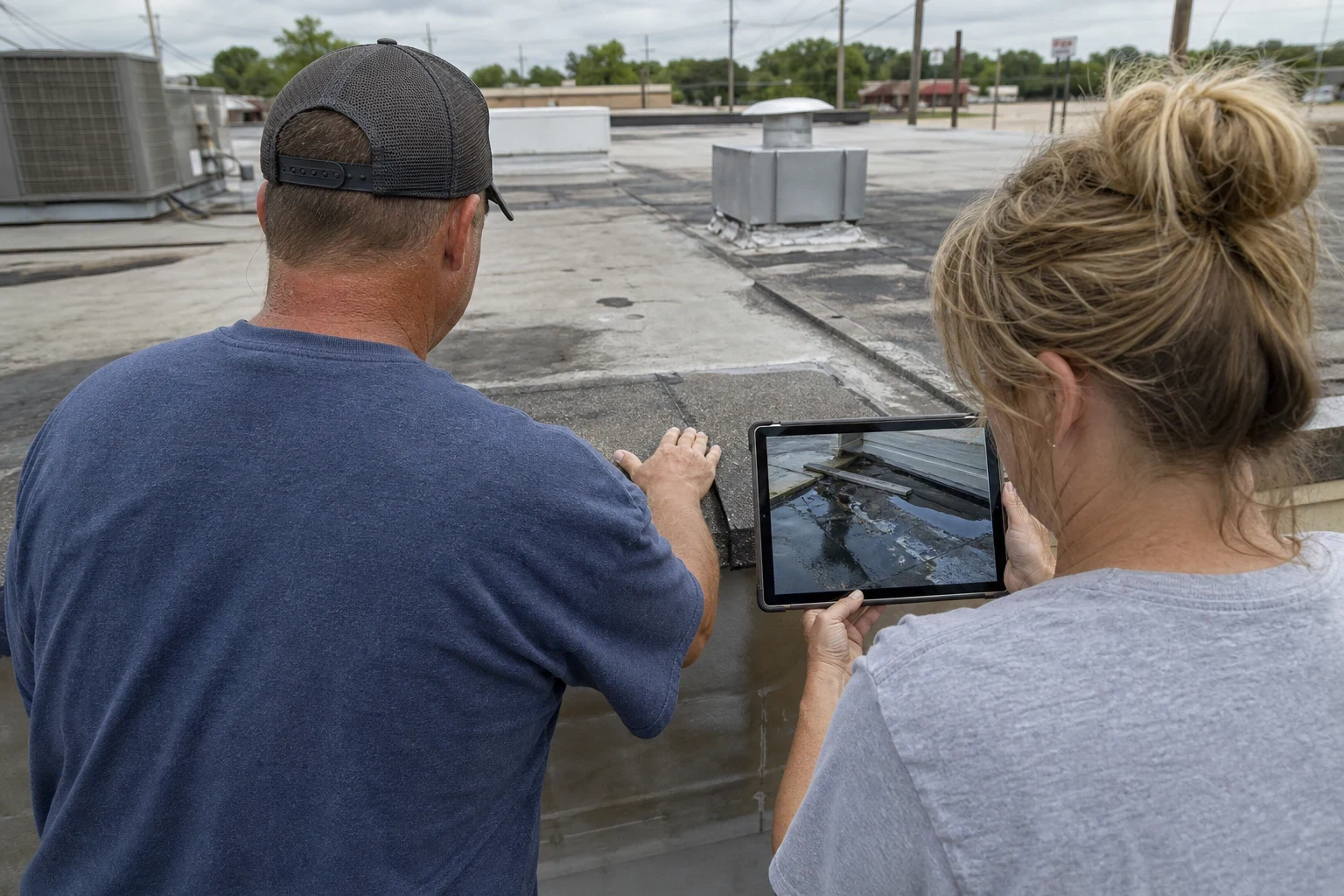
We inspect the roof, take core samples, check drains and flashing, and photograph what we find so you can see it for yourself.
- 2
Written estimate with options
You get a line-item estimate that spells out tear-off or recover, the system we recommend, any alternatives and what changes the price. We answer questions by phone before you commit.
- 3
Scheduling around your business
We plan the start date, crew access, dumpster placement and noisy work around your hours. We also coordinate with your HVAC contractor if rooftop units need to be lifted or reconnected.
- 4
Installation in sections
We remove and replace the roof in manageable sections, sealing each area before we leave for the day so the building stays watertight if weather moves in.
- 5
Final walk and inspection
After the permit inspection, we walk the roof with you, review the details and leave the site clean.
Commercial Roof Replacement Questions
Can my business stay open during the roof replacement?
In most cases, yes. We work in sections, keep entrances clear and schedule the loudest tear-off work around your busiest hours when possible. We talk through your operating hours before we set a start date.
What is the difference between TPO and EPDM?
TPO is usually a white, heat-welded membrane that reflects sunlight and helps with summer cooling. EPDM is a durable black rubber sheet with glued or taped seams that handles temperature swings well. We explain which fits your roof, budget and how long you plan to own the building.
Do I really need a full tear-off?
Not always. If core samples show dry insulation and there is only one existing roof layer, a recover may be an option. If the insulation is wet or there are already two layers, a tear-off is the right call.
How long does a commercial roof replacement take?
It depends on the roof size, the system and the weather. A small building may take a few days, while larger roofs take longer. Your estimate includes an expected timeline, and we keep you updated if rain changes the schedule.
Are you licensed to do commercial roofing in Oklahoma?
Yes. We hold an Oklahoma commercial roofing license and an Oklahoma general contractor license, and we pull the permit for your project.
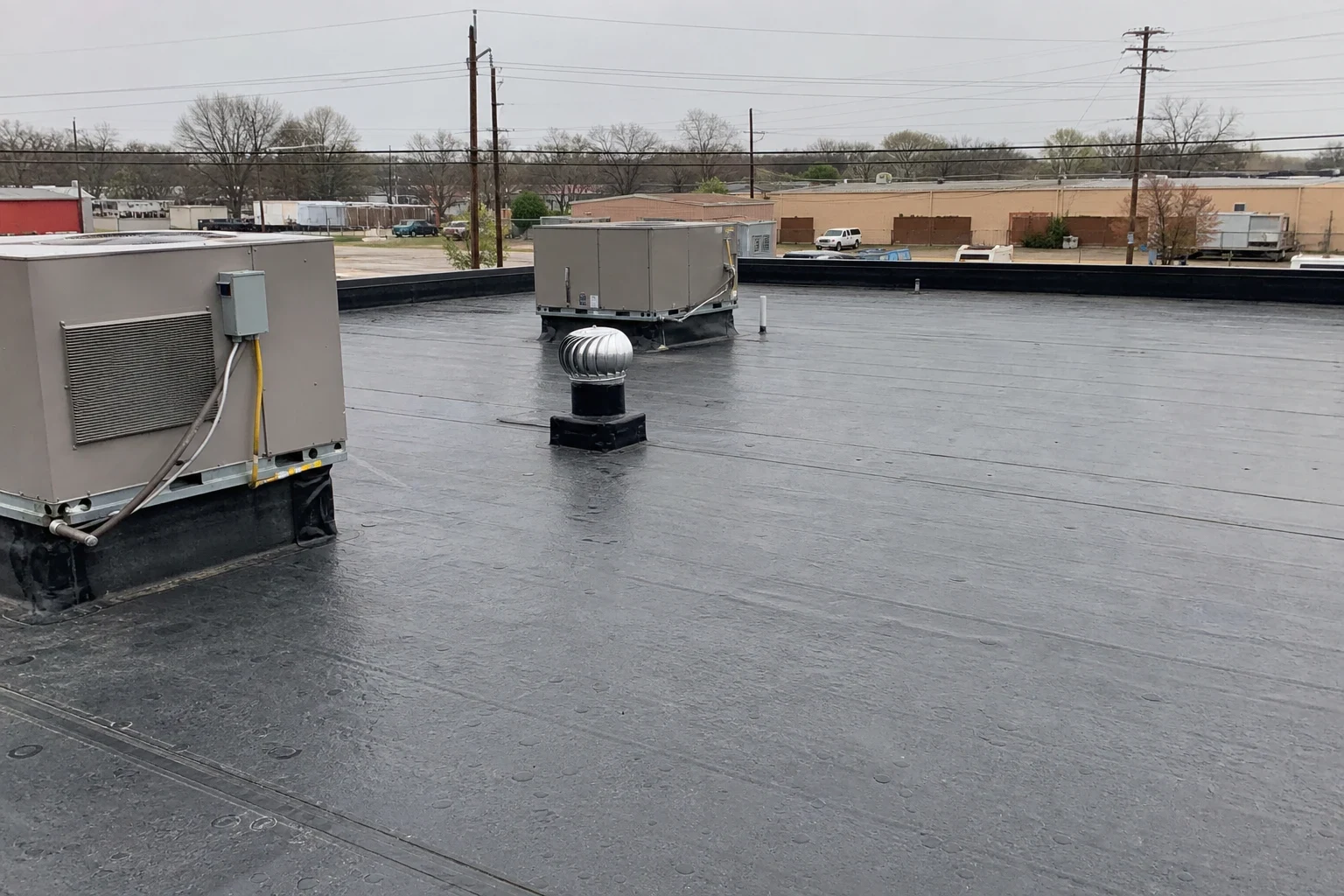
Get Straight Answers About Your Building's Roof
Tell us what you are seeing on the roof or inside the building, and we will explain your options in plain terms. We serve Warr Acres along with Bethany, Oklahoma City and nearby towns.